


 Ship Implementation Plan (SIP) for Sulphur Limit under MARPOL Annex VI 25.03.2019 00:00
The global 0.50% sulphur cap will enter into force in 2020, and more than 70,000 ships will be affected by the regulation. Stricter limits on sulphur (SOx) emissions are already in place in Emission Control Areas (ECAs) in Europe and the Americas, and new control areas are being established in ports and coastal areas in China. As a result, ship owners are weighing their options to ensure compliance.
MEPC 70 agreed to "1 January 2020" as the effective date of implementation for ships to comply with global 0.50% m/m sulphur content of fuel oil requirement and adopted resolution MEPC.280(70) on the Effective date of implementation of the fuel oil standard in regulation 14.1.3 of MARPOL Annex VI.
In this context, MEPC 73 agreed that Administrations should encourage ships flying their flag to develop implementation plans, outlining how the ship may prepare in order to comply with the required sulphur content limit of 0.50% by 1 January 2020. The plan could be complemented with a record of actions taken by the ship in order to be compliant by the applicable date.
Regulation 18.2.3 of MARPOL Annex VI requires a Party to take into account all relevant circumstances and the evidence presented to determine the action to take, including not taking control measures. Administrations and port State control authorities may take into account the implementation plan when verifying compliance with the 0.50% sulphur limit requirement.
A lack of a ship implementation plan or an incomplete ship implementation plan should not be considered as "clear grounds" for a more detailed inspection.
The ship implementation plan could be used as the appropriate tool to identify any specific safety risks related to sulphur compliant fuel oil, as may be relevant to the ship, and to develop an appropriate action plan for the Company to address and mitigate the concerns identified.
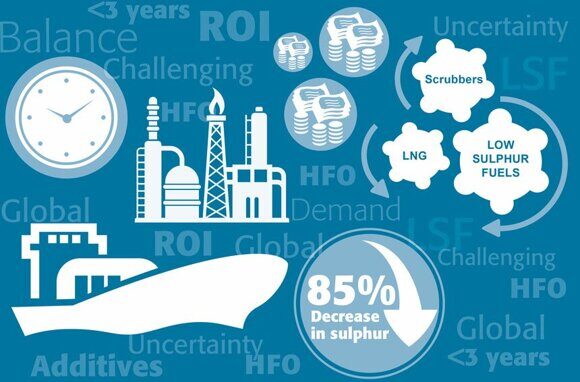
The ship implementation plan for 2020 could cover various items relevant for the specific ship, including, as appropriate, but not limited to:
-
Risk assessment and mitigation plan (impact of new fuels);
-
Fuel oil system modifications and tank cleaning (if needed);
-
Fuel oil capacity and segregation capability;
-
Procurement of compliant fuel;
-
Fuel oil changeover plan (conventional residual fuel oils to 0.50% sulphur compliant fuel oil); and
-
Documentation and reporting.
