


 Best Management Practices (BMP) Maritime Security 21.04.2025 01:58
Best Management Practices (BMP) Maritime Security (MS) consolidates previously published regional BMP documents into a single, comprehensive publication.
This Best Management Practice (BMP) is designed to support a structured approach to threat and risk assessment in the maritime environment. It offers the reader guidance on the following areas:
1. Understanding maritime security threats: insights on known threats and where to access additional information.
2. Threat and risk assessment: methods for identifying and evaluating threats and risks.
3. Planning: steps to consider when planning a voyage or offshore activity.
4. Mitigation: measures to reduce or eliminate identified risks.
5. Incident response: actions to take in the event of a security incident.
6. Post-incident considerations: steps to follow an incident, including recovery and analysis.
7. Global reporting and information centers: resources for reporting incidents and obtaining
real-time information.
8. Seafarer welfare support: aiding the well-being of crew members by outlining support available to them.
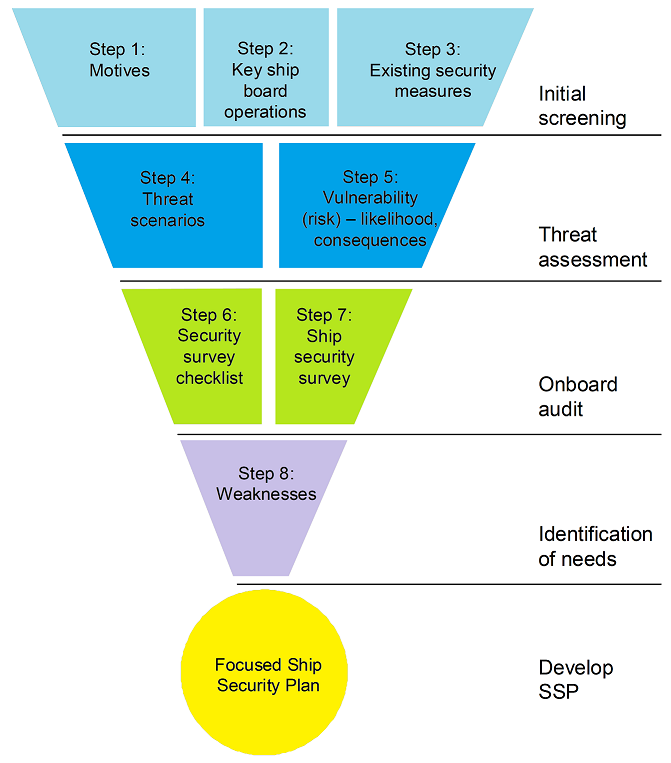
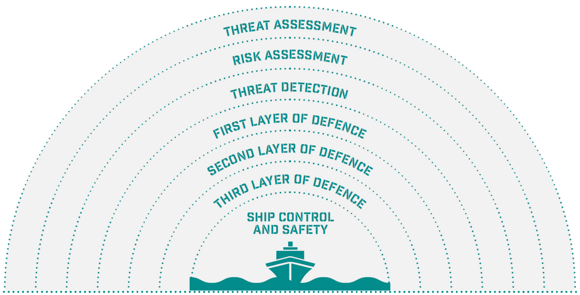
The threat and risk assessment forms the foundation for ship mitigations and layered defence strategies. The process starts with a threat assessment and works through each subsequent layer towards ship control and safety.
Risk assessment is a critical component of voyage planning and offshore activity within a safety management
system and Ship Security Plan (SSP).
The risk assessment should note the identified threats, evaluate the risks, and determine the measures for prevention, mitigation and recovery. The risk assessment should consider the following:
Who or what might be harmed and how?
What is the severity and frequency?
What is already in place to control the risks?
What further action is needed to control the identified risks?
Who needs to implement the actions?
